

02 May Sloping Block Pool Design That Works
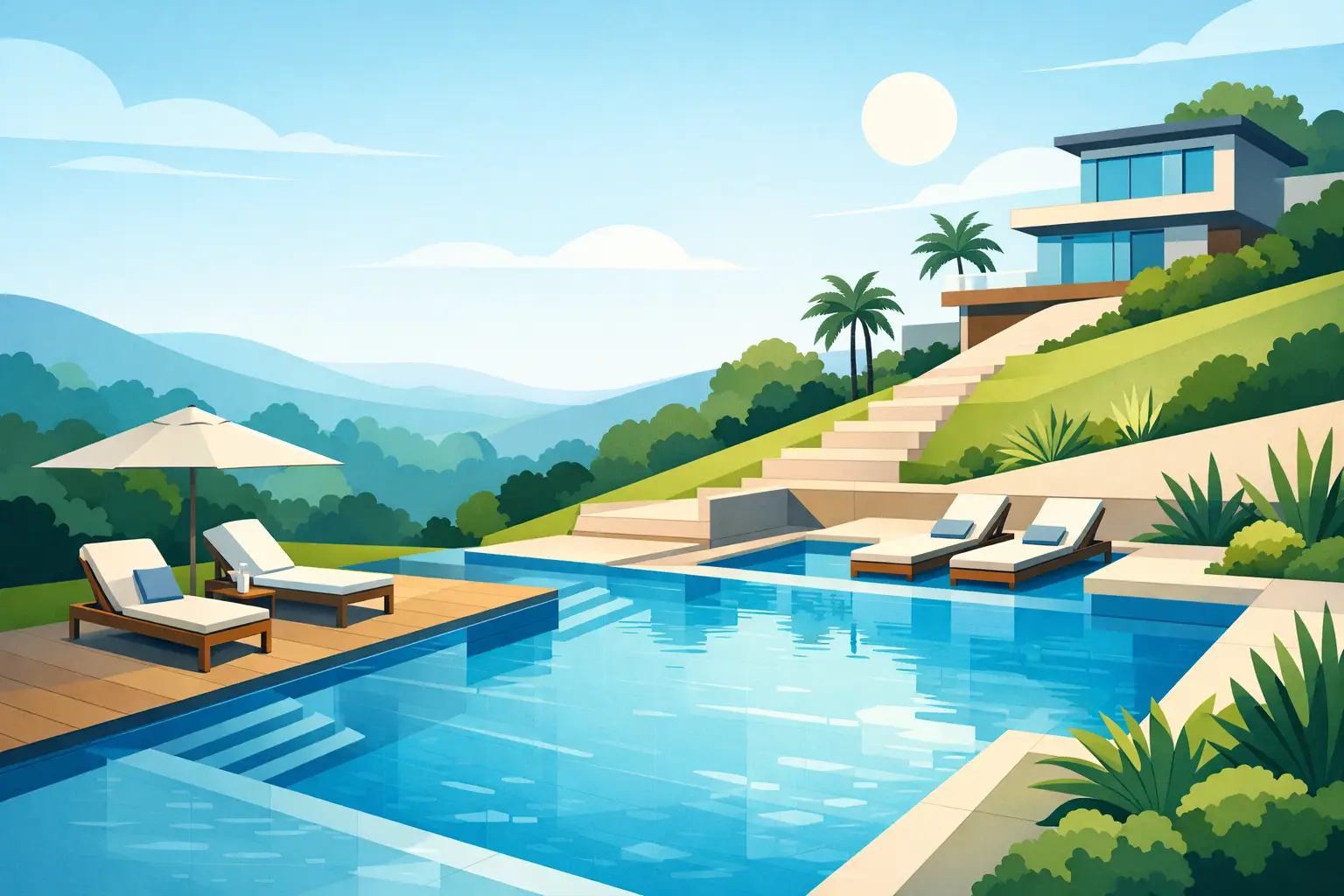
A steep backyard can look like a problem until you see what good sloping block pool design actually makes possible. On the right site, a slope can create stronger visual impact, better zoning, elevated views and a pool area that feels purpose-built rather than squeezed into place. The catch is that it needs to be designed properly from the start, with engineering, drainage, access and landscaping all working together.
Why sloping block pool design needs a different approach
Building on a flat block is usually more straightforward. On a sloping site, every design decision affects something else. Pool height influences retaining. Retaining affects drainage. Drainage affects excavation, neighbouring boundaries and the long-term stability of the finished area.
That is why sloping block pool design should never begin with the pool shape alone. The first step is understanding the block itself – the fall of the land, soil conditions, access for machinery, existing structures, boundary setbacks and how the outdoor area will actually be used by your family.
For Brisbane and South East Queensland homeowners, this matters even more because many sites combine gradient with reactive soils, stormwater considerations and tight suburban access. A good design has to solve all of those conditions while still delivering a backyard that feels inviting and easy to live with.
What a well-designed pool on a slope can achieve
A sloping site often opens up design opportunities that flat blocks simply do not have. Instead of fighting the land, the pool and surrounding landscape can be shaped around it.
In some homes, that means stepping the backyard into functional zones, with the pool at one level, a pavilion or outdoor kitchen at another and connecting stairs, paths or terraces tying the whole space together. On other blocks, it means elevating the pool to capture outlook and create a stronger architectural presence from the house.
This is where integrated design makes a real difference. If the pool builder, landscaper and structural team are all working to the same plan, the result feels cohesive. If those pieces are handled separately, homeowners often end up with a pool that technically fits but leaves awkward level changes, wasted corners or expensive rectification later.
The key decisions that shape the design
Raised pool, partially elevated pool or cut-in pool
One of the biggest choices in sloping block pool design is whether the pool sits into the slope, above it or somewhere between. There is no universal right answer. It depends on the block, the house level, the budget and the look you want.
A cut-in pool can reduce the visible bulk of the structure and may suit sites where you want the water level closer to the natural ground. A raised or partially elevated pool can work beautifully when the goal is to align with the house, create level entertaining space or use the structure itself as part of the retaining strategy. Raised designs can also suit wet edge and feature wall concepts, particularly when the site has a view worth framing.
The trade-off is cost and complexity. More structural work usually means a bigger investment, but it can also deliver a far more usable and visually impressive result.
Retaining walls are part of the design, not an afterthought
On a sloping block, retaining walls are often essential. They create level areas, support surrounding ground and help define circulation around the pool. But they should never feel like a separate engineering fix tacked onto the job at the end.
When retaining is integrated into the early concept, it can improve the whole outdoor space. Seating walls, planter edges, stairs and privacy elements can all grow from the same structural solution. That tends to look better and work harder for the family using the space.
Drainage must be resolved early
Few things cause more trouble on a sloping site than poor drainage planning. Water always needs a path, and if that path is not designed properly, it will find its own. That can lead to erosion, hydrostatic pressure, soggy lawns, staining and long-term structural issues.
Effective drainage is not flashy, but it is one of the most valuable parts of the project. Surface water, subsoil drainage, stormwater connection points and runoff from adjacent land all need to be considered before construction starts. This is especially important during Queensland storm seasons, when heavy rain tests every weak point in the design.
Matching the pool design to the way you live
A successful pool is not just one that fits the site. It also has to fit the household.
Families with young children often want broader level areas, easy visual supervision and safer movement between the house, pool and lawn. Households that entertain regularly may prioritise a stronger connection between the water, alfresco area and outdoor kitchen. Some owners want a sleek architectural statement. Others care more about practical access, low-maintenance finishes and year-round use.
On sloping blocks, these lifestyle priorities matter because space is more strategic. Every level change and structural element should have a purpose. That could mean incorporating bench seating into retaining, choosing wider steps instead of steep transitions, or placing the pool where it opens up the backyard rather than dividing it.
Materials and finishes that suit sloping sites
The structure may do the hard work, but the finishes shape how the area feels. On a sloping block, it is worth choosing materials that help the project read as one complete environment rather than a collection of separate built elements.
Paving, coping, retaining finishes, fencing, planting and lighting all need to be considered together. A contemporary elevated pool with clean lines may suit large-format paving and streamlined fencing. A softer family garden setting may call for warmer textures, layered planting and more natural transitions between levels.
There is also a practical side to finish selection. Slip resistance, heat retention, maintenance requirements and drainage performance all matter in pool areas. What looks good in a showroom can behave very differently in a real Brisbane backyard exposed to sun, rain and heavy use.
Budget realities on a sloping block
Homeowners often ask whether building a pool on a slope is significantly more expensive. Sometimes it is. But the better question is what you are paying for.
A sloping site can involve more excavation, structural engineering, retaining, drainage and access management than a flat block. That adds cost. At the same time, a well-planned design can avoid waste, reduce rework and make better use of the land you already have. If the project includes landscaping, fencing, paving and structural outdoor works, handling them as one coordinated build is usually more efficient than engaging separate trades in stages.
This is where realistic budgeting matters. If you only budget for the pool shell and leave the surrounding works until later, the finished area can feel incomplete for far too long. On sloping sites in particular, the pool and landscape generally need to be planned as one investment.
Common mistakes to avoid
The biggest mistake is underestimating the site. A slope can look manageable on paper but become far more complex once levels, boundaries and stormwater are properly assessed.
Another common issue is designing the pool in isolation. If no one has mapped out retaining, access paths, fencing positions and entertaining areas early on, homeowners can end up compromising the layout after approvals or construction begins.
It is also a mistake to chase the cheapest path on a difficult block. Value matters, but there is a difference between efficient design and cutting corners on structural work, drainage or site preparation. With sloping block pool design, the hidden parts of the project are often the ones that protect the finished result.
Why a single-team approach makes life easier
Complex backyards are rarely improved by fragmented project management. When different contractors handle design, excavation, pool construction, retaining and landscaping separately, communication gaps show up fast. Delays, mismatched levels and budget creep become more likely.
That is why many homeowners prefer one experienced team to manage the full transformation. With a coordinated approach, the pool is designed alongside the retaining walls, drainage, paving, fencing, planting and outdoor living zones. The process is simpler, the accountability is clearer and the end result usually feels more resolved.
For a family home, that matters. You are not just building a vessel for water. You are creating an outdoor area that should look right, function properly and hold up for years.
Wahoo Pool & Landscape Construction works with Brisbane families on exactly these kinds of projects, where engineering, design and construction all need to come together without unnecessary stress.
The best sloping block pool design starts with the site
There is no one-size-fits-all answer for a sloping backyard. Some sites call for a compact plunge pool with smart retaining and layered landscaping. Others suit a fully elevated design with premium finishes and broad entertaining space. The right solution comes from understanding the land first, then shaping the pool and outdoor area around how you want to live.
A difficult block does not have to limit your options. In many cases, it is the reason the final result stands out. With the right planning, a slope can become the feature that gives your backyard its character, its function and its long-term value.
No Comments