

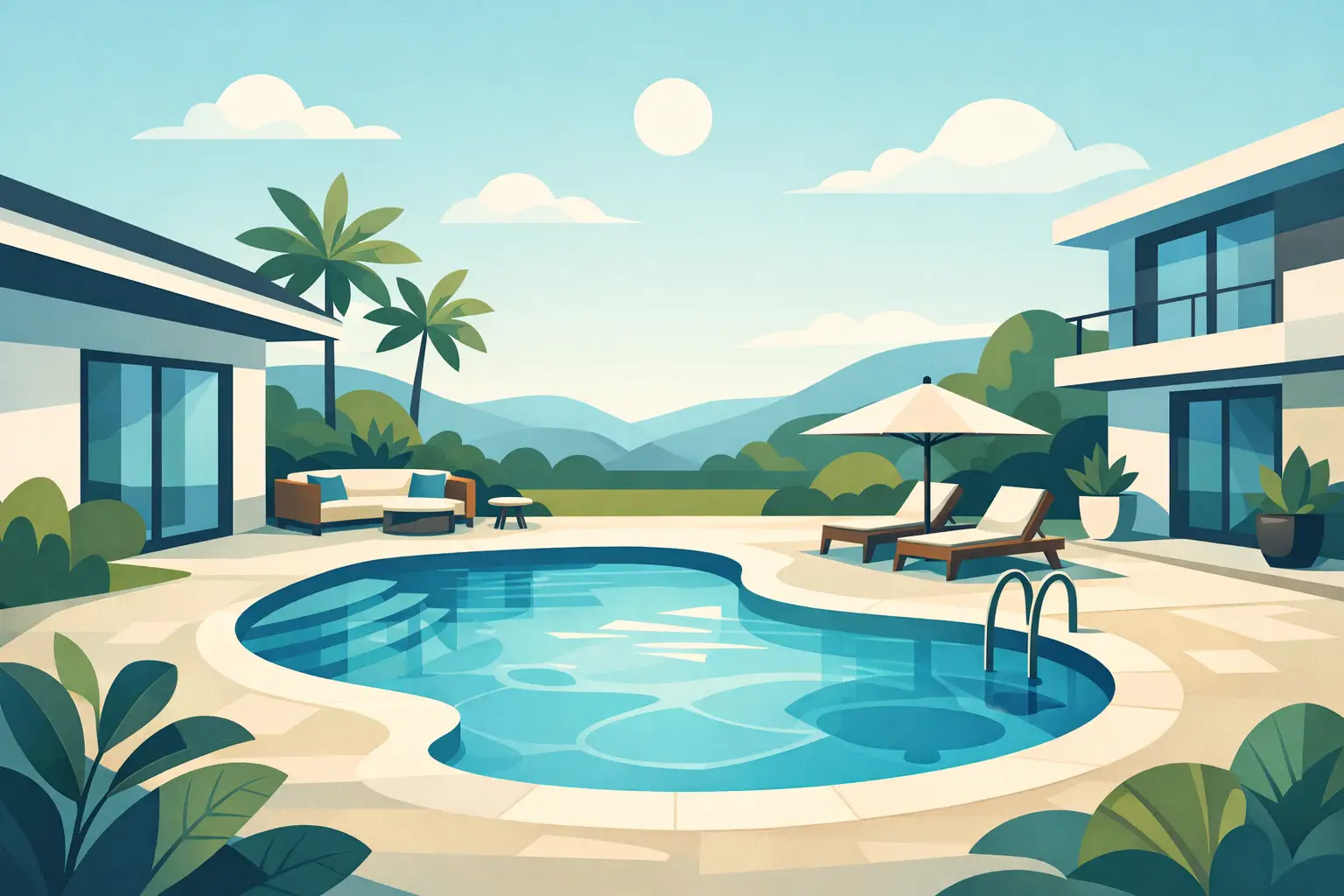
03 May Custom Swimming Pool Design That Fits Your Home
The best backyards in Brisbane are not the biggest or the most expensive. They are the ones that feel right the moment you step outside. That is exactly where custom swimming pool design earns its value – not in choosing a shape from a brochure, but in creating a pool and outdoor area that suits your block, your home and the way your family actually lives.
For many homeowners, the pool is only part of the decision. The bigger question is how the entire space will work once construction is complete. Where will people gather? How will children move between the house and the water? What happens on a sloping block, in a narrow side access situation, or when you want a pool, spa, paving and landscaping delivered without chasing multiple trades? Good design answers those questions early, before they become site problems later.
Why custom swimming pool design matters
A custom pool should do more than look impressive in a photo. It needs to respond to the practical realities of the site and the priorities of the household. A family with young children may want wide entry steps, shallow lounging space and clear sightlines from the kitchen or alfresco. A couple focused on entertaining may care more about lighting, water features, seating zones and a strong visual connection to the home.
That is why custom swimming pool design is rarely about one feature in isolation. Pool size affects the available lawn. Pool position affects privacy, sunlight and drainage. The choice of coping, paving and fencing affects how cohesive the finished space feels. A design that ignores those relationships can look good on paper and still be frustrating to live with.
In Brisbane and South East Queensland, site conditions also play a major role. Many properties have fall across the block, retaining requirements, access challenges or existing structures that limit what can be built and where. This is where experience matters. A builder who understands both design and construction can shape a pool that is realistic, compliant and visually balanced from the start.
What shapes a successful custom swimming pool design
The strongest pool designs usually begin with lifestyle, then move quickly into site realities and budget. That order matters. There is no point designing a large wet edge pool if the block, approvals or spend range make it impractical. At the same time, starting only with cost can lead to a safe but underwhelming result that misses the opportunity of the space.
The block comes first
Every custom pool starts with the land. A flat block may allow simpler excavation and straightforward surrounding works. A sloping block can open the door to dramatic outcomes, but it also introduces structural considerations, retaining, drainage and engineering requirements. Neither is automatically better. It depends on the home, the street presence and the goals of the project.
Orientation is just as important. Sun, shade, prevailing breezes and neighbouring properties all affect comfort and privacy. A pool placed for maximum visual impact from the living area may also need thoughtful fencing, planting or screening to avoid feeling exposed.
The home should lead the design language
A well-designed pool should feel connected to the house rather than added on at the end. Contemporary homes often suit clean lines, larger format paving and restrained material palettes. More traditional homes may benefit from softer edges, textured finishes or classical landscape elements. Luxury is not a single style. It is the feeling that everything belongs together.
This is one reason complete outdoor planning matters. Pool tiling, paving, retaining walls, outdoor lighting and planting all influence the final result. When these decisions are made separately by different trades, the space can lose consistency. When they are designed together, the backyard feels intentional.
The budget needs to be used wisely
Custom does not always mean extravagant. It means tailored. Some clients invest in standout structural features such as a wet edge or integrated spa. Others get better value by keeping the pool form clean and putting budget into surrounding landscaping, entertaining areas or premium finishes.
There are trade-offs in every project. A longer lap-style pool may reduce the size of a deck or lawn. A raised pool feature can add impact but also increase construction complexity. A larger pool might sound appealing, but if it leaves little room for circulation or seating, the backyard can feel crowded. The best outcome is usually the one that balances use, appearance and buildability.
Choosing the right pool type for your lifestyle
There is no universal best pool design. The right choice depends on how the space will be used and how the property is laid out.
A family pool often benefits from practical inclusions such as easy entry points, shallow zones and durable finishes that cope well with frequent use. A lap pool suits homeowners who prioritise exercise and want a strong linear design that works neatly on narrower sites. Boutique pools can be highly effective on compact urban blocks where every square metre counts. Luxury pools often lean into statement elements, but they still need to function day to day.
Some of the most striking results come from combinations. A pool with an integrated spa can support both family use and entertaining. A water walkway can create a strong architectural entry. A wet edge may suit a home with views, but it needs to be designed carefully to justify the added complexity and cost.
This is where tailored advice is valuable. Features should be chosen because they improve the way the space works, not because they are fashionable.
Why the surrounding landscape matters just as much
A pool on its own is not a finished backyard. The way people move around it, relax beside it and use it after sunset matters just as much as the shell itself. That is why pool design and landscape construction should work hand in hand.
Paving affects both appearance and safety underfoot. Planting can soften hard surfaces, create privacy and frame the pool without dropping excessive debris into the water. Retaining walls may be essential on sloping sites, but they can also become seating or visual structure. Outdoor kitchens, pavilions and lighting extend the space beyond swimming and turn it into a genuine living area.
From a project management point of view, there is another benefit to planning everything together. It reduces the risk of duplicated work, clashing levels and avoidable delays. Homeowners rarely enjoy coordinating separate contractors for excavation, fencing, concreting, drainage and landscaping. A single team managing the full scope can make the process far more straightforward.
The value of engineering and buildability
Design ideas are easy. Delivering them properly is the hard part.
This is where many homeowners benefit from working with a specialist that understands both visual outcomes and structural realities. On sloping blocks in particular, pool construction may involve substantial earthworks, retaining systems, drainage strategy and careful coordination with adjacent structures. If those factors are treated as afterthoughts, costs can escalate and timelines can blow out.
An engineering-led approach does not mean sacrificing aesthetics. It means the design is grounded in what will perform well on site and continue to perform over time. That is especially important when investing in a major backyard transformation. You want confidence that the result will not only look right at handover, but remain sound for years to come.
What homeowners should ask before committing
Before moving ahead with a pool project, it helps to ask a few direct questions. Will the design be tailored to the site or adapted from a standard template? Can the builder manage structural works, finishes and landscaping as one coordinated scope? How are sloping blocks, drainage and access challenges handled? What is included in the design-and-build process, and what may become a variation later?
The answers will tell you a lot. A clear process usually signals a builder who has delivered enough projects to anticipate issues early. That matters because confidence in the planning stage usually translates into a smoother build.
For Brisbane homeowners, local knowledge also counts. Climate, soil conditions, council requirements and the character of suburban blocks all influence how a project should be approached. A team with genuine local experience can often spot better solutions sooner.
Wahoo Pool & Landscape Construction works with homeowners who want more than a pool dropped into the yard. The aim is a complete outdoor result that is practical, visually strong and managed properly from start to finish.
Custom swimming pool design should make life easier
The real measure of a successful pool project is not how many features it includes. It is whether the finished space feels effortless to use and well suited to the home. That might mean a simple contemporary pool with clean paving and low-maintenance planting. It might mean a full backyard transformation with a spa, pavilion, retaining walls and outdoor kitchen. Either way, the design should reduce compromise, not create more of it.
If you are considering a new pool, start by thinking beyond the waterline. The best custom swimming pool design is the one that makes the whole backyard work better – for busy weekdays, relaxed weekends and the family memories that happen in between.
No Comments