10 Outdoor Living Space Ideas That Work

10 Outdoor Living Space Ideas That Work

A backyard usually tells the truth about how a home is used. If the lawn is patchy, the BBQ is crammed into a corner and nobody wants to sit outside after lunch because there is no shade, the space is not doing its job. The best outdoor living space ideas fix that. They turn unused areas into places where families actually spend time – before school, after work, on weekends and right through summer.

For Brisbane homeowners, that matters. Our climate makes outdoor living part of everyday life, but not every backyard is easy to work with. Some blocks are flat and straightforward. Others slope, hold water after rain or need retaining before anything else can begin. That is why the right idea is not always the most expensive one. It is the one that suits your site, your home and the way your family wants to live.

Outdoor living space ideas that start with how you live

A lot of outdoor projects go wrong because people start with features instead of function. They know they want a pool, or an outdoor kitchen, or a pavilion, but they have not worked out how the whole area needs to operate. A strong design begins with movement and use. Where will people gather? Where do kids enter the pool? Where will wet feet walk? Where does the afternoon sun hit hardest?

When those questions are answered early, the finished result feels natural. The pool is positioned to make the most of the yard. The entertaining area connects to the house instead of feeling tacked on. Paths, paving and planting all support the same outcome. That is when a backyard stops looking like separate jobs done over time and starts feeling like one complete outdoor room.

1. Build the layout around a pool as the centrepiece

For many Brisbane homes, the pool is the feature that drives the whole design. It adds lifestyle value, creates a visual focal point and gives the backyard a clear purpose. But the shape and placement matter more than people often expect.

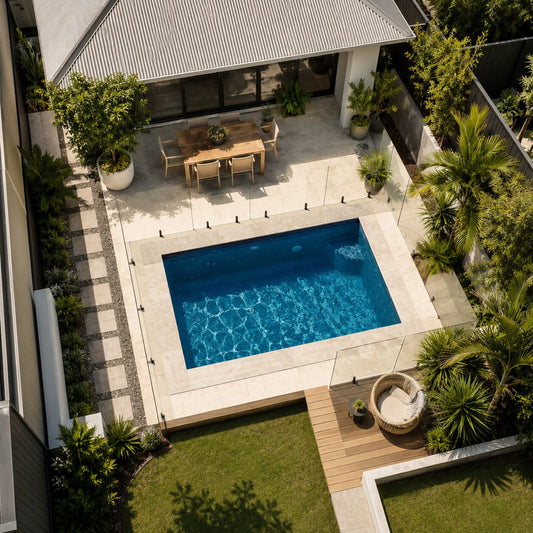
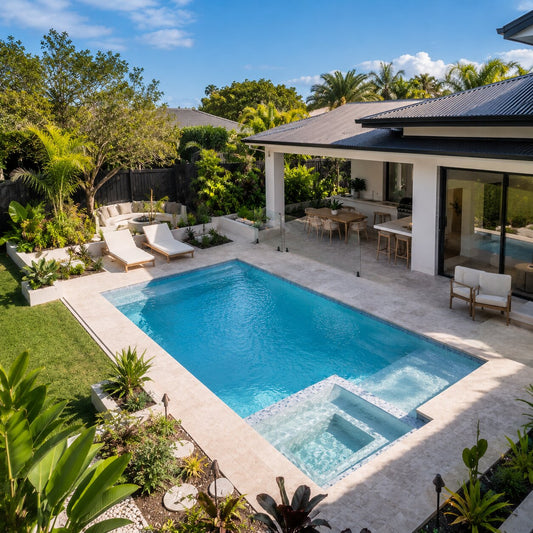
A long lap pool can suit narrower blocks and leave room for lawn or a covered entertaining zone. A boutique plunge pool may be the smarter option if space is tight but you still want a high-end finish. On larger sites, a custom pool with entry steps, seating ledges and surrounding landscape zones can create a resort-style feel without wasting space.

The trade-off is simple. Bigger is not always better. A larger pool increases construction and ongoing maintenance costs, and it can dominate a backyard if the surrounding areas are not planned well. The goal is balance.

2. Add a pavilion that makes the space usable year-round

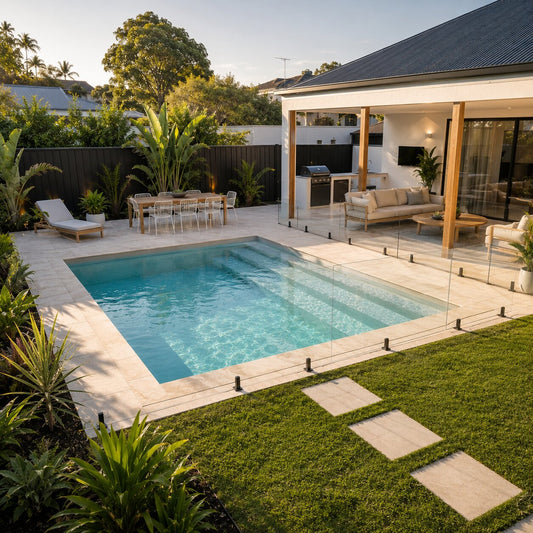
One of the most practical outdoor living space ideas is also one of the most effective. A pavilion gives your backyard structure, shade and a clear gathering point. In a Queensland climate, that can be the difference between a space that looks good and one that gets used every week.

A well-designed pavilion can cover an outdoor dining setting, lounge area or full kitchen. It also helps tie the house to the landscape, especially when materials and rooflines complement the existing home. On sloping blocks, it may need more structural planning, but that upfront thinking pays off in comfort and durability.

Open-sided designs feel airy and relaxed, while more enclosed structures offer better protection from weather. It depends on your aspect, your budget and whether you want the area to function more like a casual patio or a true outdoor extension of the home.

3. Create an outdoor kitchen people will actually use

There is a big difference between an outdoor kitchen and a barbecue on a slab. If you entertain often, a proper kitchen zone can make hosting much easier. It keeps cooking outside, reduces traffic through the house and makes the whole backyard feel more social.

The key is to be realistic about how you entertain. Some families need little more than a built-in BBQ, bench space and storage. Others want a sink, bar fridge and room for serving platters. If the area sits near the pool, materials need to handle water, sun and regular cleaning without ageing badly.

Placement matters too. Too far from the house and it becomes inconvenient. Too close to doors and windows and smoke can be a nuisance. The best results come from planning the kitchen as part of the overall outdoor layout, not as an afterthought.

4. Use paving and tiling to connect the whole backyard

Good surfaces do more than finish a project neatly. They guide movement, improve safety and help different areas feel connected. Around pools, the right paving or tiling can also reduce slipping, handle heat better underfoot and stand up to constant exposure.

This is one of those areas where cheap choices often show up quickly. Poorly selected materials can stain, crack or become uncomfortably hot in full sun. On the other hand, premium finishes need to suit the site. There is no point choosing a beautiful tile if it is too slick for a pool zone or too delicate for heavy use.

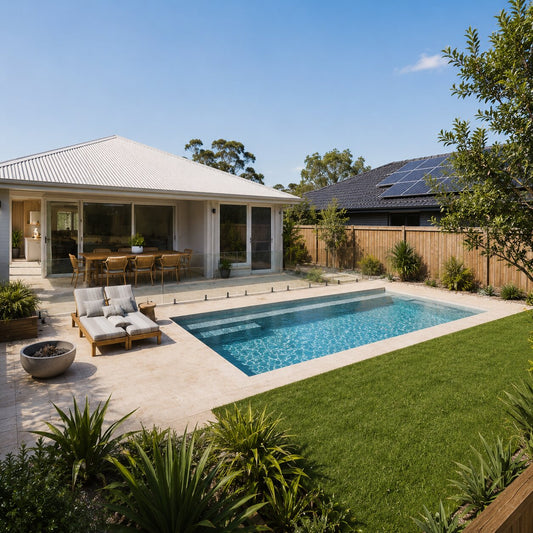
For many homes, a mix of textures works best. You might use one material to frame the pool, another for paths and a complementary finish under a pavilion or dining area. That variation adds interest without making the design feel busy.

5. Design with levels, especially on sloping blocks

In Brisbane, sloping sites are common, and they need more than cosmetic fixes. Some of the best outdoor spaces are built by working with levels rather than fighting them. Retaining walls, stepped terraces and split-level zones can turn a difficult block into a highly functional backyard.

This approach often creates stronger design outcomes than trying to flatten everything. You might place the pool on one level, entertaining on another and lawn or garden zones above or below. That separation can improve privacy, define use and make the most of views.

Of course, structural planning is critical. Drainage, soil conditions and engineering all need to be considered early. Done properly, though, level changes can become one of the most valuable parts of the design rather than a problem to solve.

6. Make lighting part of the plan, not the final add-on

Outdoor lighting is often underestimated until the first evening people try to use the space. Without it, even a beautifully finished backyard can feel flat or impractical after dark. With it, the same space feels warmer, safer and more inviting.

Lighting works best in layers. Pool lighting adds atmosphere and visibility. Step and path lights improve safety. Feature lighting can highlight planting, walls or architectural details. Under-roof lighting in pavilions and kitchen areas makes entertaining easier and more comfortable.

The trick is restraint. Too much lighting can make a backyard feel harsh. Too little and the space disappears at night. A balanced plan gives you function where you need it and ambience where you want it.

7. Include planting that softens hard surfaces

Pools, paving, walls and structures all bring form to a backyard, but planting is what makes it feel lived in. It softens edges, adds privacy and helps larger built elements sit more comfortably in the landscape.

For family homes, low-maintenance planting is usually the smart choice. That does not mean boring. It means selecting species that suit local conditions, handle reflected heat and do not constantly drop debris into the pool. In some spaces, tropical planting creates a lush resort feel. In others, cleaner architectural greenery suits the home better.

Privacy screening can also make a major difference, particularly in newer estates where neighbouring homes overlook outdoor areas. A smart planting plan can improve comfort without making the backyard feel closed in.

8. Think about drainage before finishes

Homeowners naturally get excited by tiles, coping, colours and planting. Drainage is less glamorous, but it is one of the most important parts of any outdoor project. Poor drainage can affect paving, gardens, retaining walls and even the pool surrounds over time.

If your block already holds water after heavy rain, that needs to be addressed before surface works begin. On sloping land, water movement has to be managed carefully so it does not create erosion or pressure behind walls. This is where a complete design-and-build approach saves a lot of stress. When drainage is planned alongside the pool, landscape and structural works, the finished result performs better.

9. Give the kids space without sacrificing style

A family backyard has to work in real life, not just in photos. That usually means allowing room for movement, storage and supervision. The most successful outdoor spaces for families create zones where adults can relax while keeping an eye on children in the pool or yard.

That could mean a shallow pool entry, open sightlines from the pavilion, a lawn area next to the entertaining zone or built-in seating that keeps bags and towels off the ground. None of that needs to make the design feel basic. In fact, practical planning is often what makes a high-end outdoor space feel easy to use.

10. Treat the project as one complete transformation

The strongest results come when the pool, landscape and outdoor structures are designed together. If each element is handled separately, compromises tend to appear. The paving may not align properly with the pool. The kitchen might sit awkwardly in the circulation path. Drainage and retaining can become more expensive than expected because they were not considered early.

A single, coordinated plan gives you better control over budget, timing and finish quality. It also reduces the stress of trying to juggle multiple trades and competing advice. For homeowners who want a polished result, that matters just as much as the design itself.

At Wahoo Pool & Landscape Construction, that joined-up approach is often what makes the difference between a backyard upgrade and a true lifestyle change. When every part of the space is considered together, the result feels more effortless because it has been planned properly from the start.

The right backyard should feel easy the moment you step outside. Not crowded, not disconnected and not full of features you rarely use. If you are weighing up outdoor living space ideas, start with the life you want the space to support, then build around that. The best design is not the one with the most inclusions. It is the one your family keeps coming back to.

No Comments

Post A Comment